In esports, there’s a difference between a championship squad and a struggling roster. This has a lot to do with the recruitment. Talent selection isn’t just an early task. It serves as a strategic decision that shapes a team’s culture. Also, it determines the performance and long-term growth. Esports have been growing more competitive. There are titles like Valorant and League of Legends. Some other titles that are common are BGMI and CS2. They are developing the professional tiers.
In this regard, recruitment can no longer remain informal. Teams need structure and standards. Also, they are looking for a reliable pipeline of players that are ready for the competition. That is where institutions like desportz have been changing the equation. It is known for being the Institute of Esports Training & Academics. It has been producing players who are trained in mechanics and teamwork. Also, it selects the players who have great game sense and mental resilience. desportz, in this regard, has been helping bridge the gap between raw talent and recruitment-ready competitors.
This is a guide that will explain how to identify the players truly fit for the esports team. Also, it will help in the recruitment of the right players.
What Does Recruiting the Right Players for Your Esports Team Really Mean?
People usually talk about recruiting the right players. Usually, they focus purely on rank or kill/death ratio. However, experienced team managers know it better. The right player is a combination of several factors, as follows.
Scouting the Right Players
Competitive Ladders and Leaderboards — Competitive ladders and leaderboards. Rank is the starting point; it doesn’t serve to be the conclusion. Always look for the players who consistently climb. Focus on those that do show across the multiple seasons.
Tournaments and Open Qualifiers — You will have to notice how the players perform under pressure.
Pressure Handling – Introduce high-stakes mock scenarios. The focus should be on must-win rounds. players respond to adversities in different ways.
How desportz Helps Shape Recruitment-Ready Esports Players?
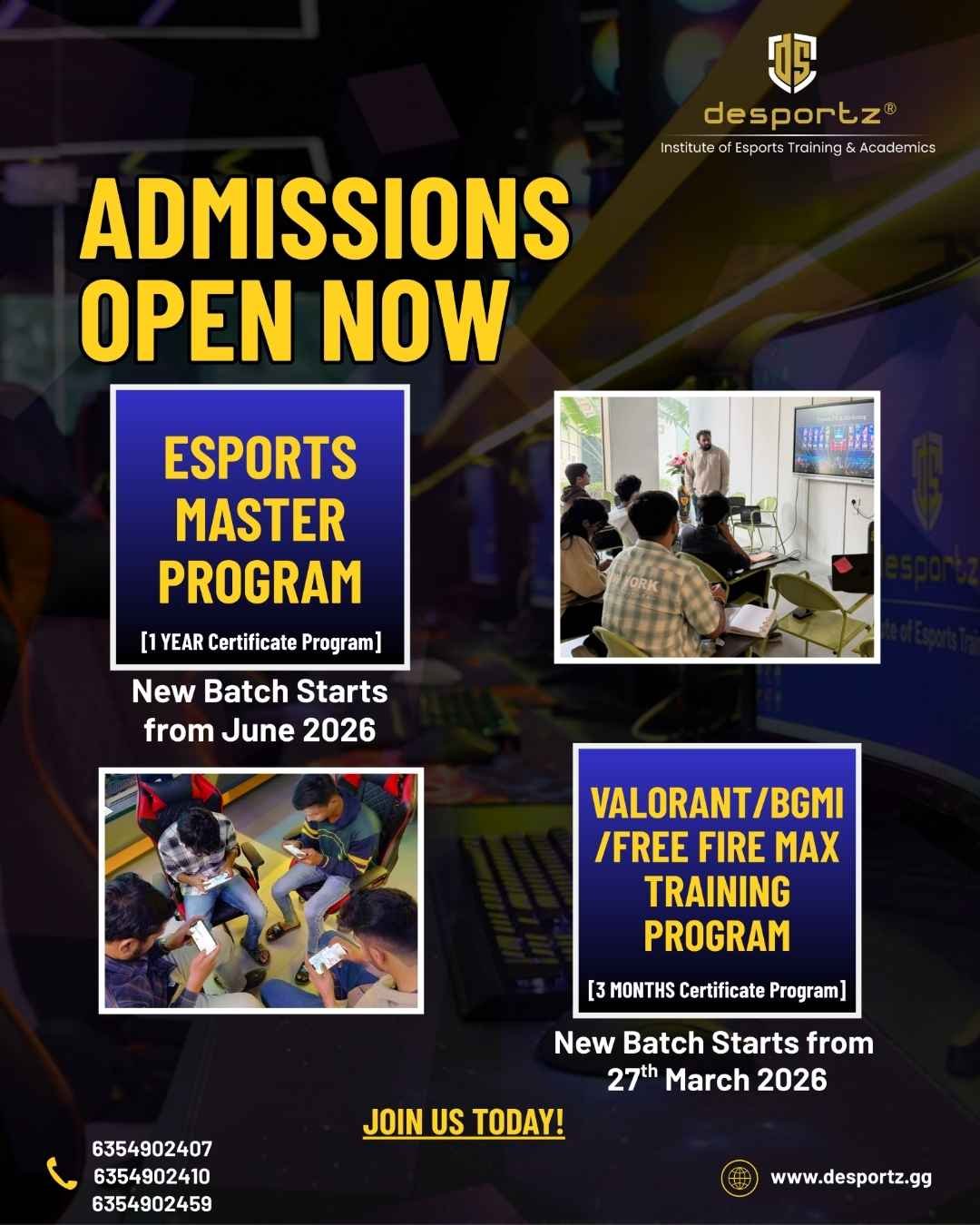
desportz is known for being the institute of esports training and academics. It has been helping create a structured path from aspiring gamer to professional competitor.
Structured training programs: desportz offers one-year master’s programs. Also, there are certificate courses. They are focused on full competitive player profiles. Students get the opportunity of building mechanical precision. Also, they understand how to build capacity for strategic thinking and teamwork.
Certified coaches and mentorship: Experienced coaches help the players improve competitive IQ. The players can develop communication and leadership skills. All of these are essential for their team environments.
Competitive exposure: Training camps and structured scrims simulate the real tournament pressure. Also, they allow the players to develop composure and decision-making ability.
Career and industry connectivity: Career counselling and industry visits help desportz connect players to the professional ecosystem. Also, the focus is on networking with the esports organizations.
Holistic development: Programs also emphasize healthy gaming habits. The focus is also on mental well-being and life skills. All of this supports the long-term competitive success.
FAQs: Recruit the Right Players for Your Esports Team.
Recruiting the right players means selecting individuals who have good mechanics. Also, they should have teamwork skills and communication. They should have good discipline and coachability. The best recruit isn't always the highest-ranked player. Rather, it is someone who fits the team's strategy. Also, the player should be the one with the specific role who knows how to handle the specific role effectively. The player should have the mindset to improve in a competitive environment.
Esports is known for being the institute of esports training and academics. It prepares the players through structured training. Also, it is known for its certified coaching and competitive exposure. Students can build mechanical skills and teamwork. Also, they build a competitive mindset while gaining experience in high-pressure environments. They have performance portfolios and professional habits. They develop it through the program. Esports graduates are usually better prepared for recruitment as well as team environments.
Recruiters usually look at the ranked leaderboards. Also, they take into consideration the open tournaments and scrim networks. They also focus on esports training institutes or academies. All of this showcases where the players perform in the structured competitive settings.
Conclusion
Recruitment of the right players for your esports team shouldn’t be guesswork. It should serve as a structured process. Make sure to define your criteria and scout with intention. Also, you should run objective multi-stage try-outs. Make sure to evaluate both the skill and character.
For the players, the message is clear. It is structured training that serves as the most credible path to recruitment. For the teams, the message is to look beyond rank. Make sure to pick the players who have been built. The right foundation changes everything. Make sure to explore how professional esports education can put you or the next great recruit on the path of competitive excellence