Esports In Education Is Misunderstood Because Most People Still Think It’s Just Gaming
Let’s be honest — when most adults hear the word “esports,” their mind goes straight to a teenager glued to a screen, skipping homework, and wasting hours on video games.
And that reaction? It’s understandable. But it’s also the reason why esports in education keeps getting dismissed before it even gets a fair hearing.
The real problem is not that esports lacks educational value. The problem is that most people have never seen it in an actual educational setting. They’re judging structured scholastic esports through the lens of unstructured home gaming — and that comparison isn’t just unfair, it’s completely wrong.
The conversation around gaming in schools has been stuck in an outdated definition for too long. It’s time we change that.
What Esports In Education Actually Means And Why That Distinction Matters
Esports in education is not the same as casual gaming
When we talk about esports in education, we’re not talking about letting students play whatever they want for however long they want. Scholastic esports is a structured, coached, and intentional activity — one that looks a lot more like a sports team than a gaming session.
Think of it this way: watching football on your couch is not the same as playing in a coached school team. The same logic applies here.
What structured esports in education usually includes
A proper esports program in an educational setting typically covers:
- Coaching and mentorship from qualified instructors
- Teamwork and communication exercises
- Strategy sessions and match reviews
- Tournament participation with clear rules and formats
- Digital citizenship and responsible online behavior
- Ongoing performance feedback and improvement plans
The core misunderstanding starts when people confuse unstructured screen time with structured learning and development. They are not the same thing — not even close.
Why Esports In Education Matters More Than Critics Realize
Here’s something important: esports in education does not matter only because it could produce the next professional player.
It matters because it can build a modern, engaging learning environment around things we already know students need — motivation, confidence, teamwork, and a real sense of purpose. For many students, especially those who don’t connect with traditional sports or classroom activities, esports can be the thing that finally makes school feel relevant to their lives.
The real value of esports in education is not just competition — it is what students build through the process.
That’s the part that gets lost in most conversations.
The Educational Benefits of Esports In Education That People Commonly Overlook
This is where the evidence really starts to speak for itself.
Esports in education builds teamwork, communication, and discipline
Every competitive esports team has roles. Someone calls the shots. Someone supports. Someone adapts mid-match. Students learn to:
- Coordinate with others under pressure
- Hold themselves accountable for their performance
- Review their mistakes and make adjustments
- Communicate clearly — even when things go wrong
These are not “soft skills.” These are life skills.
Esports in education can improve student engagement and belonging
Not every student connects with football, cricket, or debate club. But many of them connect deeply with gaming. Esports gives those students:
- A structured space where their interest is taken seriously
- A team that depends on them
- A reason to show up, participate, and contribute
When students feel like they belong somewhere at school, everything else improves — attendance, attitude, academic engagement. That’s well-documented.
Esports in education supports strategic thinking and problem-solving
Good esports is not just fast reflexes. It’s:
- Decision-making under time pressure
- Pattern recognition and adapting to opponents
- Resilience after losing a round or a match
- Critical thinking about what went wrong and how to fix it
These cognitive skills transfer well beyond the screen. And that’s exactly the point.
Why Esports In Education Is About More Than Becoming a Pro Player
One of the biggest myths around esports education is this: “Why bother if you’re not going pro?”
That thinking is just as flawed as saying there’s no point joining a school cricket team unless you’re aiming for the national squad. The reality is that the esports ecosystem is enormous — and most of the people who build it are not players at all.
Career pathways linked to esports in education
Students who engage with esports education can explore careers in:
- Coaching and performance analysis
- Broadcast and commentary
- Event operations and tournament management
- Content creation and social media
- Production and video editing
- Esports business and marketing
- Performance support and sports psychology
A mature esports ecosystem is built by far more than just players.
This is why esports education needs to be taken seriously — it is a genuine career readiness program for a fast-growing industry.
The Real Problem Is Not Esports In Education — It’s Poorly Structured Implementation
We want to be fair here. Some of the concerns parents and educators raise are legitimate.
Too much screen time is a real issue. Gaming without structure can lead to unhealthy habits. Without the right environment, toxic behavior and poor mental health outcomes are possible risks. We’re not going to pretend otherwise.
But here’s the key distinction:
The issue is not esports itself. The issue is whether it is introduced responsibly.
What responsible esports in education should include
Any well-designed esports program in schools should have:
- Qualified coaching with clear learning outcomes
- Time boundaries that protect students’ health and academic balance
- Physical and mental wellness built into the program
- A positive team culture with zero tolerance for toxicity
- A safe, supervised environment for all participants
When these elements are in place, the concerns largely disappear. The problem has never been esports — it has been the absence of structure.
Why Building the Esports Education Ecosystem Matters in India
Here’s where things get really interesting — and really urgent.
India has one of the largest and fastest-growing gaming communities in the world. Millions of young Indians are already playing, watching, and dreaming about esports. The interest is undeniably there.
But the educational and developmental ecosystem? It’s still catching up.
Students have passion. What they often don’t have is:
- Access to structured programs
- Mentorship from experienced coaches
- A curriculum that connects gaming to career outcomes
- Institutions that take esports seriously as a discipline
For esports in education to truly work in India, we need to build the ecosystem — not just celebrate the interest. That means schools, training academies, policymakers, and parents all need to shift their thinking from “is gaming okay?” to “how do we build this well?”
The time to have that conversation is now — while the industry is still growing and the opportunity to shape it responsibly is still wide open.
How desportz Is Helping Build the Esports Education Ecosystem
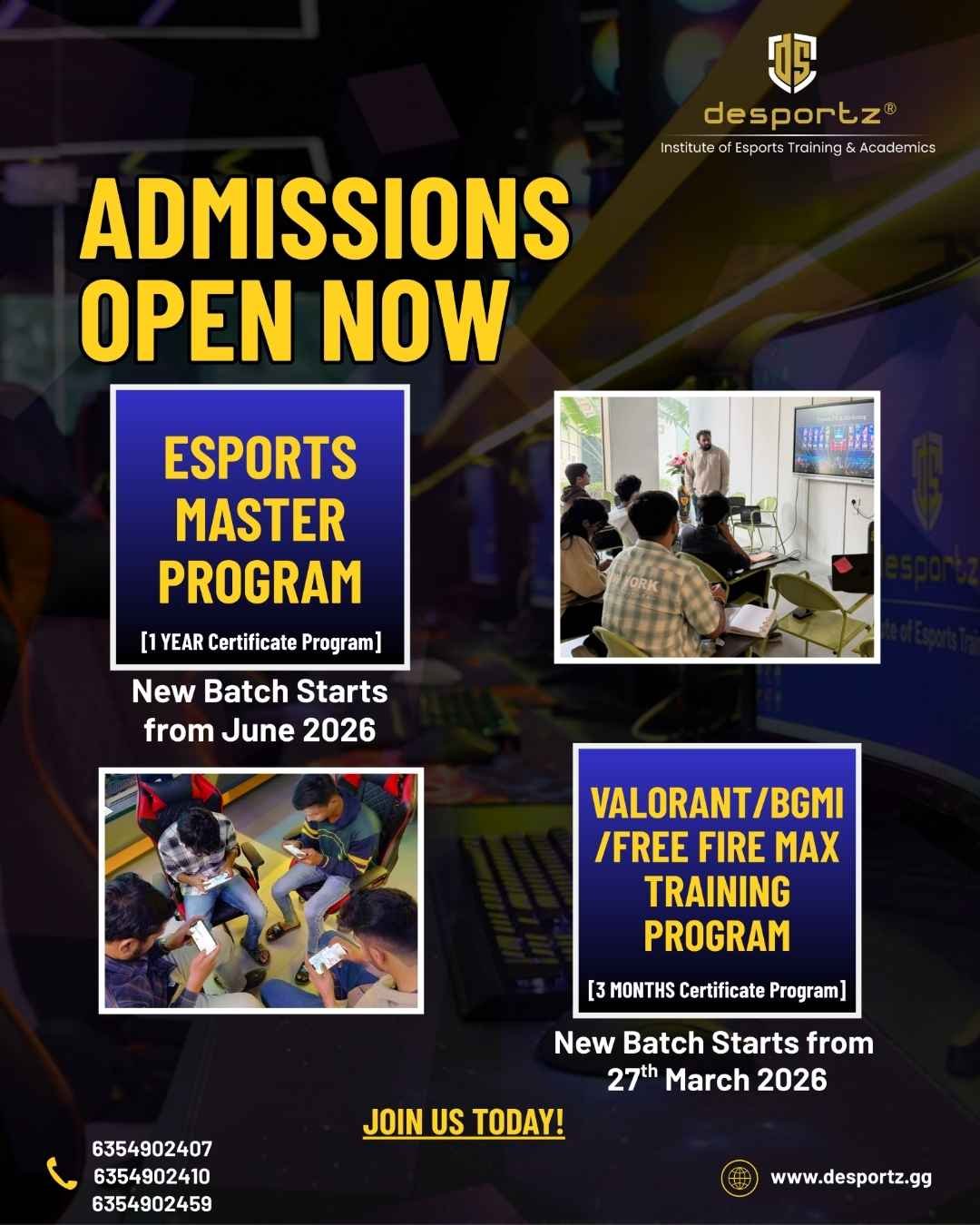
desportz is one example of what structured esports education can actually look like in practice.
Rather than simply offering gaming access, desportz focuses on building the full picture — training, academics, personal development, and career readiness — all under one roof.
Some of what desportz brings to the ecosystem:
- Structured esports training and academics designed to develop students holistically
- In-person coaching and mentorship that goes beyond screen time
- A genuine focus on healthy gaming habits and overall wellbeing
- Development of core skills like teamwork, strategic thinking, confidence, and discipline
- Support for students exploring multiple career paths across the esports industry
- Partnerships with recognized organizations including PlayVS, Gen.G Global Academy, Orangutan, Hydra Sports Network, and Upthrust Esports
At desportz, we believe esports education should not just create better players — it should help create better learners, better teammates, and a stronger ecosystem for the future.
That is what responsible ecosystem-building looks like.
Conclusion
Esports in education keeps getting misunderstood because too many people are still looking at it through an outdated lens — one shaped by entertainment, distraction, and concern rather than evidence and possibility.
But the evidence is there. The careers are real. The skills are transferable. The engagement is genuine. And in a country like India, where an entire generation is growing up inside gaming culture, the question is no longer whether we should take esports seriously in education.
The question is whether we’re willing to build it right.
The future of esports in education will not be shaped by hype alone — it will be shaped by the institutions willing to build it responsibly.
We believe we’re one of those institutions. And we hope more will join us.
FAQs – Why Esports In Education Is Misunderstood and Why It Matters
Why is esports in education misunderstood?
Because most people associate esports with casual, unstructured home gaming rather than with organised scholastic programs. When the educational, social, and career development aspects are not visible, it is easy to dismiss esports as just entertainment.
Is esports in education actually good for students?
Yes — when it is structured well. A properly designed esports program can support teamwork, communication, strategic thinking, confidence, and student engagement in ways that are genuinely beneficial.
What are the educational benefits of esports?
Esports can help students develop collaboration skills, leadership, decision-making, digital literacy, resilience, and a stronger sense of belonging within their school community.
Can esports be part of a school curriculum?
Absolutely. Schools can integrate esports through clubs, enrichment programs, curriculum-linked modules, or broader digital and career learning pathways. When aligned with frameworks like NEP 2020, it becomes even more relevant.
Is esports in education only for students who want to go pro?
Not at all. Esports education opens doors to a wide range of careers beyond professional play — including coaching, event management, broadcasting, content creation, production, and esports business. It is an ecosystem, and students can find their place anywhere within it.